
I remember sitting on a milk crate in the backroom of a boutique I was managing a decade ago, surrounded by half-empty shipping boxes and a growing sense of dread. I had just promised a VIP client a specific silk blouse, only to realize—after twenty minutes of frantic digging—that our “system” was just a stack of handwritten notes and a prayer. That was the moment I realized that fancy, expensive inventory management software isn’t a magic wand; it’s just a tool that only works if you actually have a process to feed it. Most people think they need a high-priced, enterprise-grade platform to fix their problems, but usually, they just need to stop the bleeding first.
I’m not here to sell you on some shiny, overhyped tech stack that will leave you more confused than when you started. My goal is to cut through the noise and show you how to choose a solution that actually fits your specific workflow without draining your bank account. I’m going to give you the unfiltered truth about what makes these systems work and, more importantly, how to implement them so you can finally stop playing guessing games with your cash flow.
Table of Contents
- Mastering Sku Management Systems Before You Break Your Business
- Why Real Time Stock Monitoring Is Your New Non Negotiable
- 5 Ways to Stop Letting Your Inventory Eat Your Profits
- The Bottom Line on Inventory Control
- ## The High Cost of "Good Enough"
- Stop Guessing and Start Growing
- Frequently Asked Questions
Mastering Sku Management Systems Before You Break Your Business

If you’re trying to scale while your SKU data is a mess, you aren’t growing—you’re just magnifying your mistakes. I’ve seen too many boutique owners add new product lines thinking more sales will fix their cash flow, only to realize they have no idea which items are actually moving and which are just gathering dust. You can’t build a stable foundation on guesswork. Implementing robust SKU management systems isn’t about adding more paperwork; it’s about creating a single source of truth so you aren’t apologizing to customers for items that are “in stock” on your website but missing from your shelf.
Once you get your identifiers straight, you need to move toward real-time stock monitoring. If you’re still manually counting items or relying on a spreadsheet that was last updated three days ago, you’re leaving money on the table. You need to know exactly what you have, where it is, and when it’s running low, without having to walk into the backroom every single hour. This level of clarity is what allows you to actually step away from the business and trust that the gears are still turning.
Why Real Time Stock Monitoring Is Your New Non Negotiable
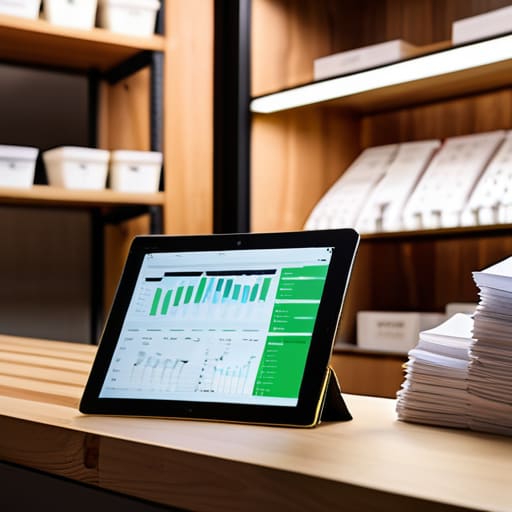
If you’re still relying on a spreadsheet that you update at the end of every Friday, you aren’t managing a business—you’re managing a crisis. I’ve seen too many boutique owners lose customers because they sold an item online that was actually sold out in their physical shop three hours prior. That kind of friction kills brand loyalty faster than bad service ever could. You need real-time stock monitoring so that your digital storefront and your physical shelves are actually speaking the same language.
Relying on “gut feelings” about what’s in the backroom is a recipe for burnout. When you implement multi-channel inventory synchronization, you stop playing a constant game of catch-up. It’s about moving from a reactive state—where you’re frantically apologizing for overselling—to a proactive state where you actually know your margins. Stop treating your stock levels like a guessing game and start treating them like the foundation of your cash flow. If you don’t know exactly what’s sitting on your shelves at this very second, you don’t truly know how much money you have.
5 Ways to Stop Letting Your Inventory Eat Your Profits
- Stop buying software for the features and start buying for the integration. If your inventory tool doesn’t talk to your POS and your accounting software, you aren’t saving time—you’re just creating more manual data entry for yourself.
- Look for automated reorder points, not just pretty dashboards. I don’t care how sleek the interface looks if it doesn’t alert you the second a high-margin item hits a critical low. You need a system that acts as your early warning signal.
- Prioritize mobile accessibility so you can actually use it on the floor. If you have to walk back to a desk every time you need to check a count, your system is failing you. You should be able to scan a barcode right where the product sits.
- Demand granular reporting that tracks your “dead stock” specifically. Most founders focus on what’s selling, but the real money is often lost in the stuff gathering dust in the corner. Your software should tell you exactly what to liquidate.
- Test the “human error” factor before you commit. If the software requires a PhD to operate, your team won’t use it correctly, and your data will be garbage within a month. Choose a tool that is intuitive enough for a busy floor staff to master in twenty minutes.
The Bottom Line on Inventory Control
Stop treating your inventory like a guessing game; if you aren’t tracking every SKU in real-time, you’re just bleeding cash through shrinkage and missed sales.
Software isn’t a magic wand for a messy business—it’s a tool that only works if your underlying data and processes are clean before you hit “import.”
True scalability isn’t about how many orders you can ship in a day, it’s about having the systems in place so you don’t have to work 14-hour shifts to manage the chaos.
## The High Cost of "Good Enough"
“If you’re still relying on a messy spreadsheet or a gut feeling to tell you what’s in your warehouse, you aren’t running a business—you’re managing a crisis. Inventory software isn’t a luxury expense; it’s the floor that keeps your entire operation from collapsing every time you try to scale.”
Marisol Quintero
Stop Guessing and Start Growing

At the end of the day, inventory management software isn’t just another digital tool to add to your tech stack; it’s the backbone of your entire operation. We’ve talked about why you can’t afford to ignore SKU management and why real-time monitoring is the only way to stop the bleeding of lost revenue and wasted space. If you keep trying to manage your stock levels with spreadsheets and gut feelings, you aren’t building a business—you’re just managing a constant state of crisis. Implementing these systems means you finally stop playing defense against your own warehouse and start playing offense with your actual data.
I want you to remember why you started this business in the first place. It probably wasn’t to spend your Friday nights counting boxes or stressing over backorders. The goal is to build something that works for you, not something that keeps you tethered to a laptop at 11 PM. Investing in the right systems is how you buy back your time and your sanity. Once your backend is solid, you can finally stop chasing every shiny object and focus on the high-level strategy that actually moves the needle. Build your foundation first, and the scale will follow.
Frequently Asked Questions
How do I know if I actually need a dedicated software system or if my current spreadsheet is just getting too heavy to manage?
If you’re spending more time fixing broken formulas and cross-referencing manual entries than you are actually selling, your spreadsheet has become a liability. When you start seeing “ghost stock”—items that say they’re there but aren’t—or if you’re terrified to make a single update because you might break the whole sheet, it’s time to move. Spreadsheets are great for starting, but they aren’t built to scale. Don’t wait for a massive order to fail before you upgrade.
What’s the realistic time commitment for my team to learn a new system without it completely derailing our daily operations?
Let’s be real: if you try to overhaul everything on a Tuesday morning, you’re going to fail. Expect a two-week “transition dip” where productivity slows down. Plan for about 30 to 60 minutes of dedicated training per team member, spread out over several days. Don’t do a marathon session; nobody retains information like that. Do bite-sized chunks, test it in a sandbox environment, and keep your current manual backups running until you’re actually confident.
How do I ensure the software actually talks to my existing sales channels so I'm not manually updating stock levels in three different places?
You need to look for “native integrations” or a robust API. If you’re selling on Shopify, Instagram, and in-person, your software shouldn’t just sit there—it needs to be the single source of truth. Before you sign anything, ask the vendor: “Does this sync bi-directionally in real-time?” If they hesitate or say it’s a “daily batch update,” walk away. You aren’t looking for a digital filing cabinet; you’re looking for an automated ecosystem.
