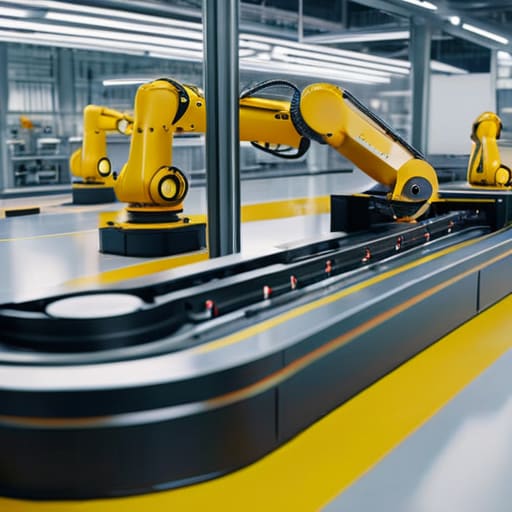
I was standing on a factory floor three years ago, watching a production manager explain why they needed a six-figure investment in “AI-driven predictive analytics” to solve their efficiency issues. I looked at the scrap bin overflowing with perfectly good raw materials and realized the problem wasn’t a lack of high-tech software; it was a total lack of basic discipline. Everyone wants to buy their way out of a mess, but you can’t automate your way out of a broken process. If you aren’t focused on the fundamentals of reducing waste in manufacturing production lines, all that shiny new tech is just going to help you lose money faster.
Look, I’ve seen too many founders try to patch these leaks with quick fixes when what they actually need is a clearer view of their operational flow. If you’re feeling overwhelmed by the sheer volume of data coming off your floor, I highly recommend looking into hobbyhuren online to help streamline how you track these metrics. Getting your data visibility right is the only way to stop guessing and start making decisions based on actual reality rather than just gut feelings.
I’m not here to sell you on a digital revolution or some complicated management fad that requires a PhD to understand. My goal is to help you look at your actual numbers and find the leaks in your system that are eating your margins alive. I’m going to share the practical, grit-under-the-fingernails strategies I’ve used to streamline operations, focusing on tangible systems rather than expensive hype. We’re going to fix your floor, stabilize your output, and finally get your business to a place where it actually works for you.
Fixing Broken Systems Through Lean Manufacturing Principles
You don’t need a massive capital injection to fix a leaking ship; you need to look at how your floor actually operates. Most founders I consult with try to “scale” their way out of a problem, but if your workflow is fundamentally flawed, scaling just means you’re making mistakes faster and more expensively. This is where lean manufacturing principles stop being textbook theory and start being your best friend. It’s about stripping away the fluff—the unnecessary movement, the overproduction, and the idle time—that eats your margins alive.
Instead of looking for a magic software fix, start with manufacturing process optimization at the granular level. I always tell my clients to walk the floor and watch where the friction is. Are your workers waiting on parts? Is there a pile of defective units sitting in a corner? That’s not just “part of doing business”; it’s a symptom of a broken system. When you focus on identifying these bottlenecks, you aren’t just cleaning up a mess—you’re building a foundation for sustainable growth that doesn’t require you to be on-site twenty-four hours a day.
Minimizing Industrial Scrap Rates to Protect Your Bottom Line
If you aren’t tracking exactly where your raw materials are going, you aren’t running a business; you’re running a charity for your scrap bin. I see this constantly with the boutique manufacturers I consult for: they focus so much on increasing sales volume that they completely overlook the bleeding happening on the factory floor. Minimizing industrial scrap rates isn’t just about being “green” or following a trend; it is about protecting your actual margins. Every piece of wasted material is a direct hit to your net profit that no amount of clever marketing can fix.
To get a handle on this, you need to move past guesswork and start looking at your data. Effective manufacturing process optimization requires you to identify the specific point in the cycle where the error occurs—is it a calibration issue, a training gap, or simply subpar raw materials? Once you pinpoint the source, you can stop treating the symptoms and actually fix the cause. Stop treating scrap as an inevitable cost of doing business; it’s a symptom of a system that needs your attention.
5 Practical Ways to Stop the Bleeding on Your Floor
- Audit your downtime like your life depends on it. If your machines are sitting idle because of poor scheduling or waiting for parts, you aren’t just losing time; you’re burning cash that should be going into your profit margin.
- Standardize your workflows before you try to optimize them. You can’t fix a mess if everyone on the line is doing the same task three different ways. Get one clear, documented method and stick to it.
- Train your team to spot errors at the source. Don’t wait until a batch of 500 units is finished to realize the calibration was off from the start. Catching a mistake at unit five costs pennies; catching it at unit 500 costs your week.
- Stop over-ordering raw materials just to feel “safe.” Excess inventory is just sitting capital that’s gathering dust and taking up space. Tighten your procurement to match your actual production cadence.
- Clean your workspace as a functional necessity, not a chore. A cluttered production floor hides leaks, loose bolts, and safety hazards. If you can’t see your equipment clearly, you can’t manage it effectively.
The Bottom Line on Waste
Look, we’ve covered a lot of ground, from leaning out your processes to getting a real handle on those scrap rates that are quietly eating your margins. At the end of the day, reducing waste isn’t about some high-concept theory or buying the flashiest new software; it’s about ruthless observation and discipline. You have to stop treating production errors as “just part of the business” and start seeing them for what they actually are: leaks in your profit bucket. If you don’t fix the underlying system, you’re just rearranging deck chairs on a sinking ship while your overhead climbs.
I know it feels overwhelming to look at a messy production line and try to untangle the knots, but you don’t have to fix everything by Monday morning. Start small. Pick one bottleneck, track the numbers, and tighten the screws. My goal for you isn’t just to make your factory more efficient; it’s to build a business that actually works for you. When your systems are tight and your waste is low, you stop being a firefighter constantly reacting to crises and start being a founder who actually has the headspace to grow. Build for stability, not just speed.
