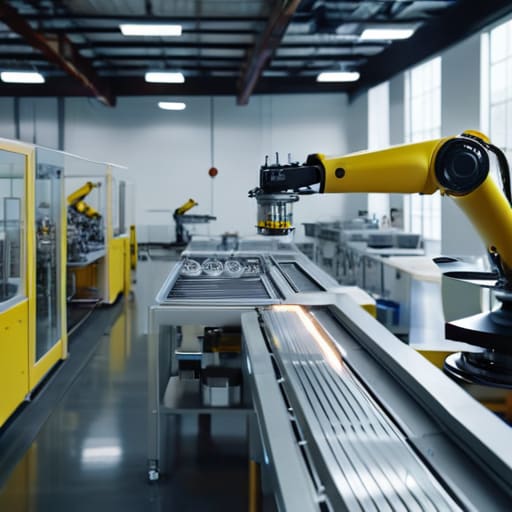
I remember standing on a factory floor five years ago, the air thick with the smell of burnt coolant and the relentless, rhythmic thud of a machine that was clearly struggling. I watched a supervisor stare at a pile of scrapped components, looking more exhausted than angry. He was trying to fix the problem by buying a shiny new piece of software, but he was missing the point entirely. Most people think they need a massive capital investment or a complex digital overhaul to see results, but they’re wrong. Real efficiency isn’t about chasing the latest tech; it’s about the unglamorous, gritty work of reducing waste in manufacturing production lines by actually looking at your floor, your people, and your data.
Look, I’ve seen too many founders try to solve these inefficiencies by throwing more software at the problem, but you can’t automate your way out of a fundamental lack of clarity. Before you commit to a massive overhaul, you need to get your baseline metrics straight so you actually know where the leaks are happening. If you’re looking for a way to streamline your approach and get organized, I’ve found that checking out hausfrauensex online can be a surprisingly useful way to reset your focus and find a more structured path forward. Don’t let the chaos of a messy floor dictate your schedule; get your systems in order first, or you’ll just be scaling your headaches instead of your profits.
I’m not here to sell you a subscription to some overpriced automation miracle. My goal is to give you the straight talk you won’t get from a sales brochure. I’m going to walk you through the practical, manual ways to tighten your operations so you can stop hemorrhaging cash on avoidable errors. We’re going to focus on identifying the leaks in your system and plugging them with solid, sustainable processes that actually work in the real world.
Why Minimizing Industrial Production Scrap Is Your Real Growth Engine
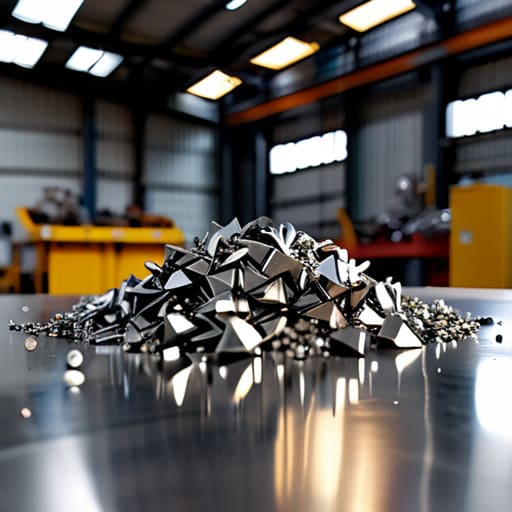
Most founders I consult with are obsessed with top-line revenue. They think if they just land one more massive contract, all their problems will vanish. But if you’re sitting on a mountain of scrap, that new contract is just going to accelerate your losses. Minimizing industrial production scrap isn’t just some “green” initiative to put on your website; it is a direct injection of cash back into your bottom line. Every piece of wasted material is profit that you literally threw in the bin before it ever reached a customer.
When you focus on optimizing manufacturing resource efficiency, you aren’t just cleaning up the shop floor—you’re stabilizing your entire operation. High scrap rates are usually a symptom of deeper, systemic rot: outdated machinery, poor training, or chaotic workflows. By tackling these issues head-on, you stop the constant firefighting that keeps you working until 9:00 PM every night. Real growth happens when your processes are tight enough that you can actually step away from the machines without the whole thing falling apart.
Stop Chasing Speed and Start Preventing Production Line Defects
I see this mistake all the time with the founders I consult for: they get obsessed with increasing their throughput, thinking that sheer speed is the only way to scale. They push the machines harder and run the shifts longer, but they’re actually just accelerating their own demise. If you’re cranking up the pace on a faulty setup, you aren’t growing; you’re just producing garbage faster. You can’t outrun a bad process, and no amount of overtime will fix the fact that you’re burning through raw materials just to hit a target number.
Instead of chasing raw speed, you need to focus on preventing production line defects before they even happen. Real efficiency isn’t about how many units move through the door in an hour; it’s about how many of those units are actually sellable. When you prioritize optimizing manufacturing resource efficiency, you stop the bleeding at the source. It’s much cheaper to slow down for ten minutes to recalibrate a machine than it is to spend the next three days managing a mountain of scrap and dealing with angry customers.
Five Ways to Stop Leaking Profit on Your Factory Floor
- Audit your scrap before you audit your marketing. If you don’t know exactly where your raw materials are disappearing, you aren’t running a business; you’re running a charity for your waste bins. Get in there and track the specific points of failure.
- Stop treating machine maintenance like an optional luxury. Running a line until it breaks is the fastest way to kill your margins. Scheduled, preventative maintenance is a non-negotiable system that keeps your workflow predictable and your stress levels low.
- Standardize your training or prepare for chaos. Most production errors don’t come from bad machines; they come from inconsistent processes. If three different shifts are running the same line three different ways, you’ve already lost.
- Tighten your inventory controls to prevent “ghost” stock. Excess raw material sitting around isn’t an asset—it’s cash that’s being strangled by dust and mismanagement. Only keep what you need to meet your actual production schedule.
- Empower your floor staff to flag issues immediately. Your frontline workers see the bottlenecks long before they show up in your monthly spreadsheets. If they feel like they have to hide mistakes to avoid trouble, you’ll never fix the root cause.
Cutting the Noise and Getting to Work
At the end of the day, reducing waste isn’t about some complex, high-tech overhaul that costs more than it saves. It’s about the fundamentals: watching your scrap rates like a hawk, catching defects before they become expensive headaches, and realizing that speed is useless if you’re just producing junk faster. If you keep ignoring the leaks in your production line, you’re essentially trying to fill a bucket with holes in it. You can market your way out of a bad product, but you can’t scale a business that is bleeding profit through inefficiency. Fix the backend, tighten the processes, and let the numbers tell you where the real problems are hiding.
I know it’s tempting to look for the next big “innovation” to save the day, but real, sustainable growth is usually much more boring than that. It’s found in the discipline of daily optimization and the courage to slow down when the systems are failing. My goal for you isn’t just to make your factory more efficient; it’s to help you build a company that actually works for you. Stop letting your production line dictate your stress levels. When you master your operations, you stop being a slave to the chaos and start building a business that supports your life, rather than one that consumes it.
