
I was sitting in a client’s back office last Tuesday, staring at a stack of unpaid invoices and a chaotic inventory spreadsheet, while she frantically showed me her latest TikTok views. She was obsessed with her “reach,” but her fulfillment process was a total wreck. This is the trap I see small business owners fall into every single week: they treat content creation like a magic wand that will fix a broken business model. Let me be blunt—if your operations are leaking money, a viral video is just going to help you fail faster.
I’m not here to teach you how to dance for an algorithm or chase every fleeting trend that pops up on your feed. Instead, I’m going to show you how to build a sustainable content engine that actually supports your bottom line without stealing your entire life. We’re going to talk about creating assets that work for you, rather than you working for them. My goal is to help you move past the performative noise and start using your voice to drive actual, measurable growth that doesn’t require you to be glued to your phone 24/7.
Table of Contents
Fix Your Multimedia Production Workflow First

Before you even think about picking up a camera or opening a design app, you need to map out your multimedia production workflow. Most founders I consult with treat their output like a series of frantic, disconnected sprints. They film a video, post it, and then stare at the screen wondering why they feel so drained. That’s because they lack a repeatable system. You need a clear pipeline that moves from the initial idea through scripting, filming, and editing without you having to reinvent the wheel every Tuesday morning.
If you don’t have a structured process, you aren’t building a brand; you’re just performing manual labor. A solid digital content strategy relies on predictability. I want to see you documenting your stages: pre-production, production, and post-production. When you standardize these steps, you stop leaking time and money. You’ll find that once the “how” is settled, you can actually focus on the “what,” allowing you to produce higher-quality work without the constant fear that you’ve forgotten a crucial step in the middle of the chaos.
The Content Marketing Lifecycle Beyond the Hype

Most founders treat their marketing like a series of frantic, one-off sprints. They post a video, wait for the dopamine hit of a few likes, and then wonder why their bank account hasn’t moved. That’s not a strategy; that’s a hobby. To actually see a return, you have to respect the full content marketing lifecycle. This means moving past the “post and pray” method and looking at how a single idea evolves from a rough concept into a piece of collateral that actually drives revenue.
You need to stop viewing every post as an isolated event. Instead, think about how your pieces feed into a broader digital content strategy. A well-thought-out system allows you to repurpose one high-quality insight across multiple platforms without reinventing the wheel every Monday morning. If you aren’t mapping out how a customer moves from seeing a reel to reading your newsletter to eventually clicking “buy,” you’re just making noise. Build a loop, not a treadmill.
5 Ways to Stop Treating Content Like a Full-Time Job
- Build a reusable asset library. Stop starting from scratch every Monday morning; keep a organized folder of templates, brand colors, and raw footage so you aren’t reinventing the wheel every time you need to post.
- Audit your output against your actual revenue. If you’re spending ten hours a week on Reels but your sales are flat, stop. Content is a tool for business, not a hobby to keep you busy.
- Batch your production like a pro. Set aside one afternoon to film or write everything for the week. Jumping in and out of “creative mode” throughout the day is a massive productivity killer.
- Use a single source of truth for your ideas. Stop letting great content ideas die in your head or get lost in random DM threads; get them into one central system—a notebook or a simple project tool—immediately.
- Prioritize quality over frequency. I’d much rather see a founder post one high-value, well-thought-out piece of content a week than five pieces of low-effort noise that just clutter up the feed and burn them out.
The Bottom Line for Your Business
Stop treating content like a hobby and start treating it like a production line; if you don’t have a repeatable process, you’re just wasting time and money.
Focus on the metrics that actually impact your bank account, not just the vanity likes that feel good but don’t pay the bills.
Build a system that works for you, not the other way around—if your content strategy is stealing 40 hours of your week, your business model is broken.
## Stop Treating Content Like a Fire Drill
“If you’re treating content creation like a series of emergency sprints, you don’t have a marketing strategy—you have a broken system. Stop trying to outrun your lack of process with more posts; build a repeatable workflow that actually fits into your workday, or you’ll just end up scaling your own burnout.”
Marisol Quintero
Build for Longevity, Not Just Likes
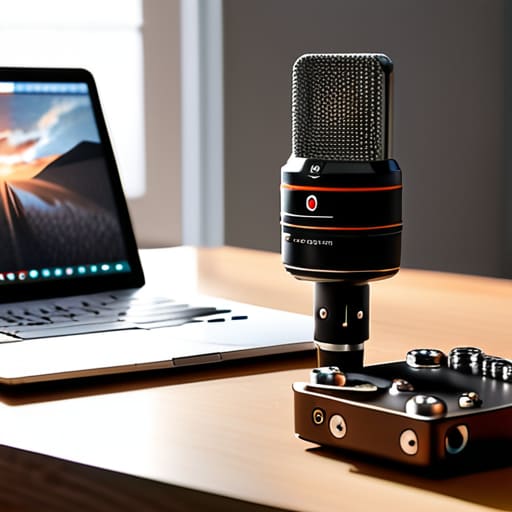
At the end of the day, content creation shouldn’t feel like a second full-time job that you didn’t sign up for. We’ve talked about why you need to fix your multimedia production workflow and why you must view your content through a full lifecycle rather than just chasing the next dopamine hit from a viral post. If you don’t have the systems in place to capture, organize, and repurpose what you create, you aren’t building a marketing engine—you’re just running on a hamster wheel. Stop treating every single post like a life-or-death situation and start treating your content as a predictable asset that feeds into a larger, well-oiled machine.
My goal for you isn’t to make you the most prolific creator on your feed; it’s to help you become the most efficient owner of your brand. I want you to reach a point where your content works for you while you’re actually out living your life, or perhaps even while you’re elbow-deep in a mid-century modern restoration project. Focus on the substance of your systems rather than the noise of the trends. When your backend is solid and your processes are repeatable, you stop reacting to the algorithm and start commanding your own growth. Build a business that serves you, not one that demands your constant, exhausted attention.
Frequently Asked Questions
How do I know if I'm actually seeing a return on my content investment, or if I'm just throwing money at pretty videos that don't convert?
Stop looking at “likes” as a metric for success; they’re vanity metrics that don’t pay the bills. If you want to know if your content is actually working, look at your conversion rate and customer acquisition cost. Are people clicking through to your site and actually buying, or are they just scrolling past? If your engagement is high but your sales are flat, you aren’t building a business—you’re just paying for digital applause.
My team is already stretched thin—how much of my existing workflow can I actually automate before I lose the brand's personality?
Automate the heavy lifting, not the heart. Use tools to handle scheduling, file organization, and data entry—the stuff that drains your energy without adding value. But if you let an AI write your captions or dictate your brand voice, you’re just adding more noise to an already crowded market. Automate the logistics so you actually have the mental bandwidth to show up authentically. If it requires a soul, keep it manual.
If I'm focusing on systems and backend processes, how do I prevent my content from sounding too clinical or losing that human connection?
Systems aren’t meant to replace your personality; they’re meant to protect it. When you aren’t drowning in manual tasks or hunting for lost files, you actually have the headspace to be human. Think of your workflow as the scaffolding—it stays in the background so the architecture can shine. Use your systems to handle the repetitive “how,” which frees you up to focus entirely on the “why” and the actual connection with your customers.
